What Is Sofubi
From 1960s kaiju toys to hand-painted small runs, how Japanese soft vinyl is made, why collectors love it and how to keep it from turning sticky.
ThreeA Wiki desk2 min read
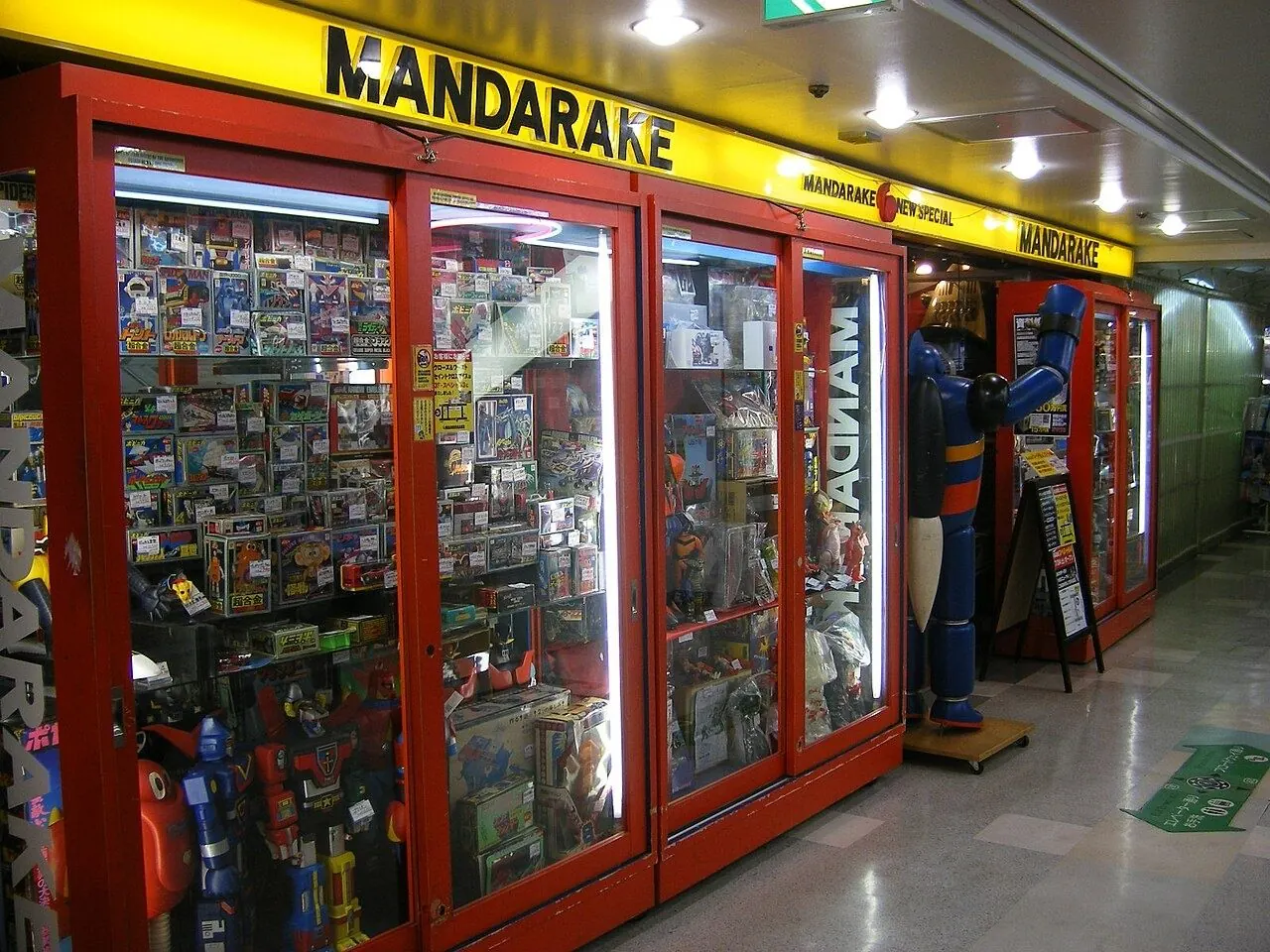
Photo: fletcherjcm / Wikimedia Commons, CC BY-SA 2.0
Sofubi is the Japanese shorthand for "soft vinyl": hollow toys cast from flexible PVC, a tradition that began with postwar vinyl dolls and kaiju monster figures and now lives on in small, hand-painted runs by independent makers.
What Sofubi Means
Sofubi is a shortening of the Japanese phrase "sofuto biniiru," which translates to "soft vinyl." It describes both the flexible polyvinyl chloride (PVC) the figures are cast from and the making method behind them.
The classic process is rotocasting, sometimes called slush casting. A liquid PVC mix, with pigment added for the base color, is poured into a copper mold, which is heated and rotated so the vinyl coats the inside walls evenly. While still warm and pliable, the hollow part is pulled out of the mold with pliers; heads, arms and legs are then assembled by hand. Color is added with sprays through fitted metal masks, pad printing for fine marks, and hand brushwork for weathering.
That process explains the look and feel. Sofubi figures are light, hollow and slightly squeezable, with soft edges, unlike the solid, crisper parts of injection-molded hard PVC or ABS figures.
From Kaiju Boom to Collector Staple
Soft vinyl toys appeared in Japan in the 1950s; a milk-drinking doll made by Masudaya in 1953 is often cited as the first. The kaiju connection came with Marusan, a Japanese toy maker that began producing soft-vinyl monster figures in 1966, starting with creatures from the TV series Ultra Q, the forerunner of Ultraman.
Marusan went bankrupt in 1968. Former Marusan staff founded Bullmark in 1969, and it built its reputation on Godzilla and Ultraman soft-vinyl figures through the 1970s. Bullmark closed in 1977, and one of its cofounders revived the name in 2009 for reissues and new figures.
Those vintage figures were mass-produced children’s toys. The collector revival of the 1980s and 1990s, and then designer sofubi, turned the format into something else: independent artists and small studios sculpting original creatures, casting short runs and painting each batch, often selling them at collector events. The small runs and hand-applied paint mean that no two color schemes, and sometimes no two figures, are quite the same, which is much of the appeal.
Caring for Soft Vinyl
Soft vinyl stays soft because it contains plasticizers, and over time these can migrate to the surface. The Canadian Conservation Institute lists PVC among the plastics prone to developing sticky surfaces from plasticizer migration, and notes that dust sticking to such surfaces causes damage that is not readily reversible. It also rates plasticized PVC as sensitive to heat, with deformation possible from about 30–45 °C, and to sunlight, which can cause discoloration and embrittlement.
In practice, keep sofubi in a cool, dry room out of direct sun and away from heaters, car interiors and hot attics. Do not let soft vinyl touch other plastics, foam or painted surfaces for long periods, since plasticizer can stain what it touches; conservators use non-stick interleaving sheets such as PET film between objects. Dust gently with a soft brush rather than solvents.
The practical takeaway: sofubi means hollow soft vinyl, cast in copper molds and finished by hand. Know the maker, look for the soft, hollow feel and hand-applied paint, and store it cool and out of the sun so it lasts.
General information for collectors, checked against the sources below at the time of writing. Makers change product lines and packaging; check the maker’s own pages before you buy, repair or ship a piece.