Gunpla Grades Explained
A plain map of the Bandai Gunpla ladder, what each step up adds, and where a first-time builder should start.
ThreeA Wiki desk2 min read
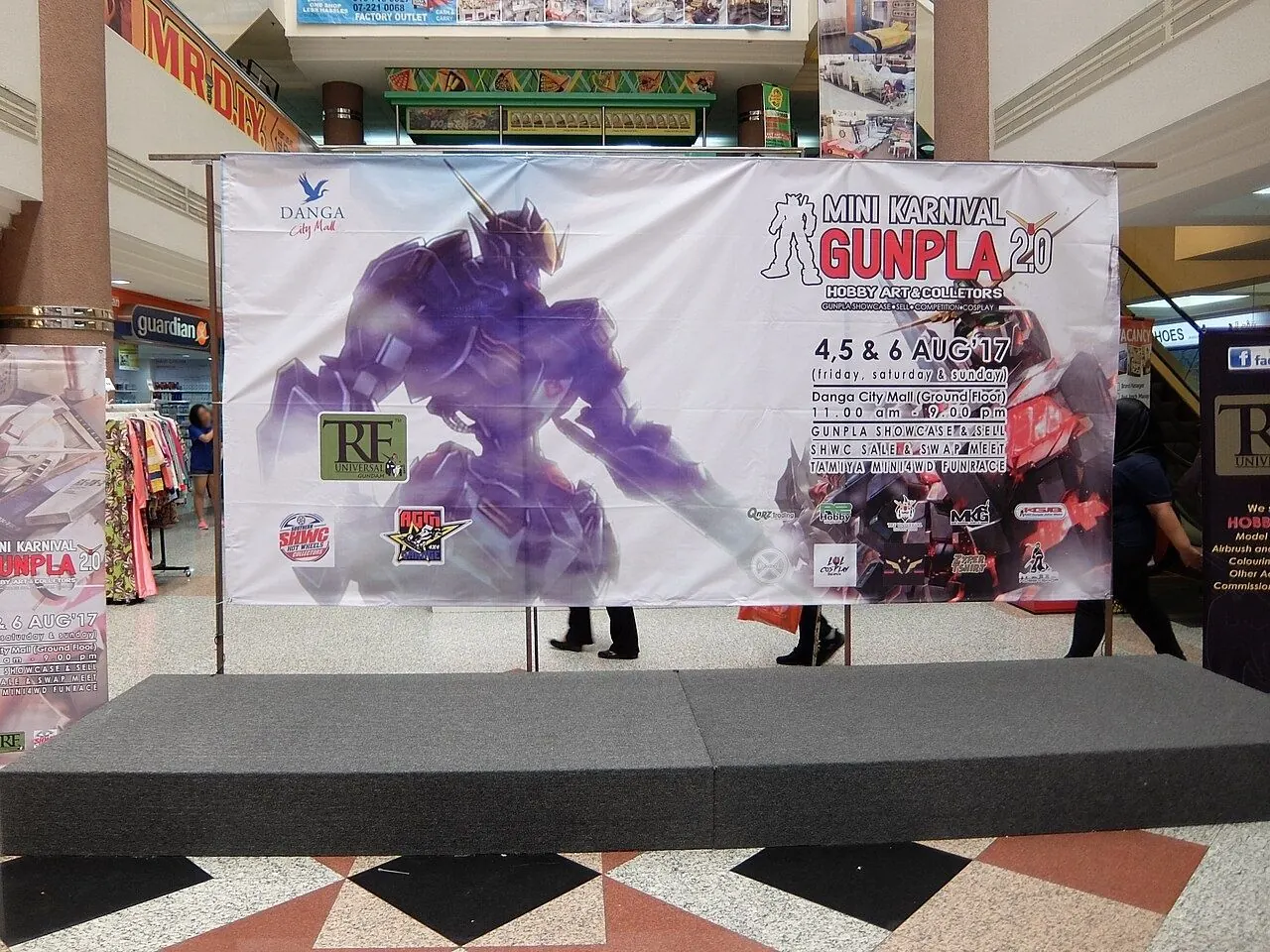
Photo: Chongkian / Wikimedia Commons, CC BY-SA 4.0
Gunpla grades tell you a kit's scale and how much engineering sits inside it: Entry Grade and High Grade are the easy 1/144 starting points, Real Grade packs more detail into 1/144, Master Grade moves up to 1/100 with an inner frame, and Perfect Grade is the 1/60 top of the ladder. For a first build, an Entry Grade or a High Grade kit is the safe choice.
What the grades mean
| Grade | Scale | What sets it apart |
|---|---|---|
| SD (Super Deformed) | Non-scale | Small, cartoony proportions and the fewest parts |
| EG (Entry Grade) | 1/144 | Touch gates let parts come off the runner by hand, no nippers needed |
| HG (High Grade) | 1/144 | The mainstream line, launched in 1990, simple and widely available |
| RG (Real Grade) | 1/144 | Launched in 2010, an inner skeleton and fine detail at small size |
| MG (Master Grade) | 1/100 | Launched in 1995, an inner frame and extra detail throughout |
| PG (Perfect Grade) | 1/60 | The largest, most detailed and most complex kits |
| Full Mechanics | 1/100 | Dense mechanical detail with easier assembly than a typical MG |
Like other Gunpla, these kits snap together: parts come molded in color, and no glue is needed. Bandai also sells side lines such as RE/100, a 1/100 grade with larger parts and HG-level complexity, and SD variants such as SD EX-Standard and SD Cross Silhouette.
What changes from one grade to the next
Each step up the Gunpla ladder adds more detail and articulation, both in the outer paneling and in the internal skeleton that moves the limbs and joints. Part count and build time grow with it, so an HG can be finished in an evening while an MG or a PG is a project spread over several sessions.
The biggest jumps are between EG and HG, and then between RG and MG: from a basic kit, to a mainstream build with reasonable detail, to a higher-engineering kit with a full inner frame. RG is the exception to the size rule. It is as small as an HG but closer to an MG in difficulty, because so much frame and detail is packed into 1/144 parts.
What a beginner should buy first
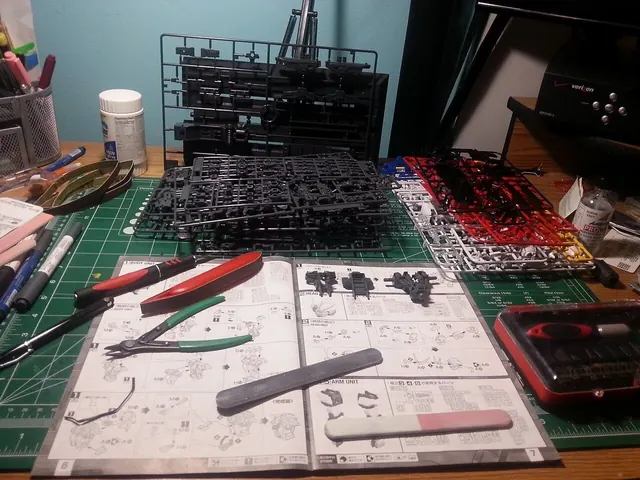
For a first build, an Entry Grade kit is the gentlest start, since its parts can be twisted off the runner by hand. Nippers will be needed from HG up, and a hobby knife and sanding sticks are handy for cleaning up the small nubs left where parts were cut from the runner.
If you want something with more detail, an HG is the usual next step. Its 1/144 scale balances shelf space, detail and an easy build. An RG looks tempting at the same size, but its fiddly inner frame can frustrate a novice, so it is better saved for a later kit.
Gunpla grades are best understood as a ladder. Each step up means more parts, more complex engineering and a longer build time. Choose a grade that suits the detail you want on display and the time you have, and there is no need to start with a PG.
General information for collectors, checked against the sources below at the time of writing. Makers change product lines and packaging; check the maker’s own pages before you buy, repair or ship a piece.