Displaying Action Figures
Museum rules on dust, UV and heat translate neatly to a figure shelf, from cabinet choice and LED lighting to stands, anchoring and rotation.
ThreeA Wiki desk3 min read
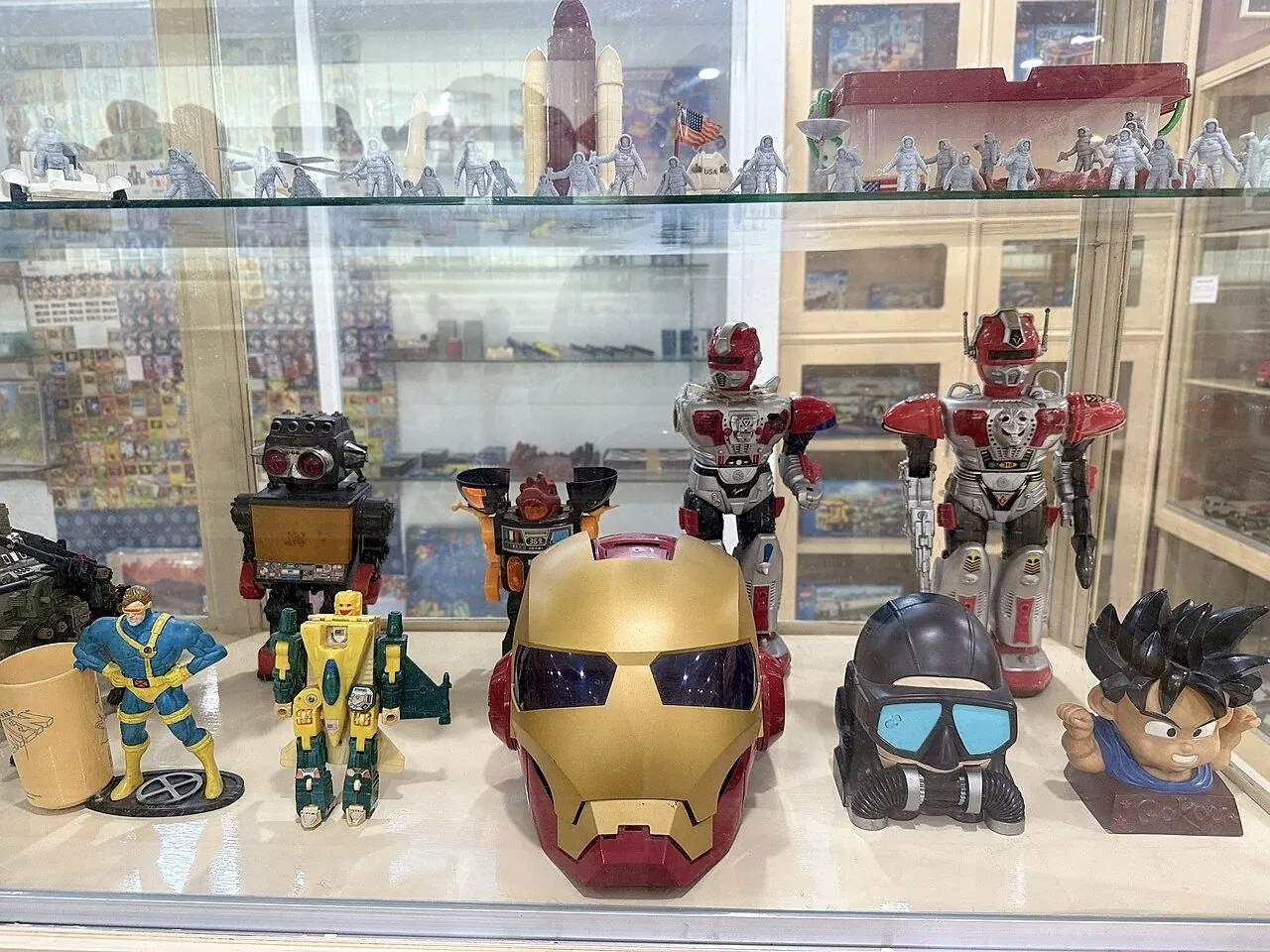
Photo: HaidirAndiNovianto / Wikimedia Commons, CC BY-SA 4.0
The best way to display action figures is in a closed glass cabinet away from windows, lit by LED, with top-heavy pieces anchored and the lineup rotated now and then. Every step back from that, such as open shelves, a sunny room or halogen spotlights, trades long-term condition for convenience.
Dust and light: the enemies of a collection
The main threats to a long-term display are dust buildup and exposure to light. The Canadian Conservation Institute advises protecting objects from dust with enclosures wherever possible and warns that carpets in a room generate lint that settles on everything nearby. Open shelving is normal in casual displays, convenient but not protective: every exposed figure needs regular dusting, and every dusting is handling that can snap a thin part or rub paint.
The biggest risk is light. National Park Service conservation guidance treats light damage as cumulative and irreversible and calls for eliminating all ultraviolet radiation in spaces that house collections, because UV causes yellowing, chalking and embrittlement while visible light fades paints and dyes. Sunlight through an ordinary window carries far more UV than LED lamps, so the single best display decision is placement: a wall that never gets direct sun. Where a window cannot be avoided, the NPS recommends UV-filtering film over the glass and blinds or curtains, and it recommends UV-filtering glass or acrylic for framed works.
Choosing cabinets and lights
For lighting, the NPS recommends LEDs because they do not emit UV and give off minimal heat. The Canadian Conservation Institute notes that incandescent lamps have the highest heat output of any lamps and are not suitable inside cases, which rules out halogen puck lights in a closed cabinet. Even with LEDs, damage is a product of intensity and time, so put cabinet lights on a switch or timer instead of leaving them on around the clock.
Glass cabinets keep dust off and hands away, and shelf risers or stepped stands let a back row sit above the front row without crowding. Figure stands matter as much as the cabinet: a stand that grips the waist or hips carries the weight a pair of ankle joints was never meant to hold for years. Pose for display with the figure balanced over its feet, avoid holding a heavy weapon at full extension, and relax extreme poses that keep a joint under constant strain. Some wood products and paints give off acids and other harmful vapors, which the NPS lists as a risk for storage and exhibit cases, so let a freshly painted or newly built cabinet air out before filling it.
Stability and rotation
Top-heavy figures, statues and tall mecha need anchoring, especially in earthquake-prone areas or active homes with pets and kids. Museum wax or museum putty under the base holds a piece to the shelf without permanent adhesion; use a small amount on the underside of a stand or base, never on painted or fabric parts, and test that it pulls off cleanly. A small bracket or clear line behind a very tall piece adds a second safeguard.
Preventing dust buildup and wear comes down to a regular cleaning habit and reducing how much a collector handles each figure. Rotating pieces in and out of display spreads light exposure across a collection; the NPS recommends a rotation schedule for light-sensitive objects rather than leaving them out indefinitely. A simple label or card behind each figure, with its name, line and release year, makes rotation and inventory easier and keeps loose accessories matched to their owner.
No collector lives in museum conditions. Pick the risks worth accepting: a closed cabinet on a shaded wall with LED lighting covers most of what matters, and everything else is a trade-off between access and condition.
General information for collectors, checked against the sources below at the time of writing. Makers change product lines and packaging; check the maker’s own pages before you buy, repair or ship a piece.