Panel Lining Model Kits
Marker or enamel wash, black, gray or brown: a step-by-step guide to clean panel lines and to keeping solvent away from stressed joints.
ThreeA Wiki desk2 min read
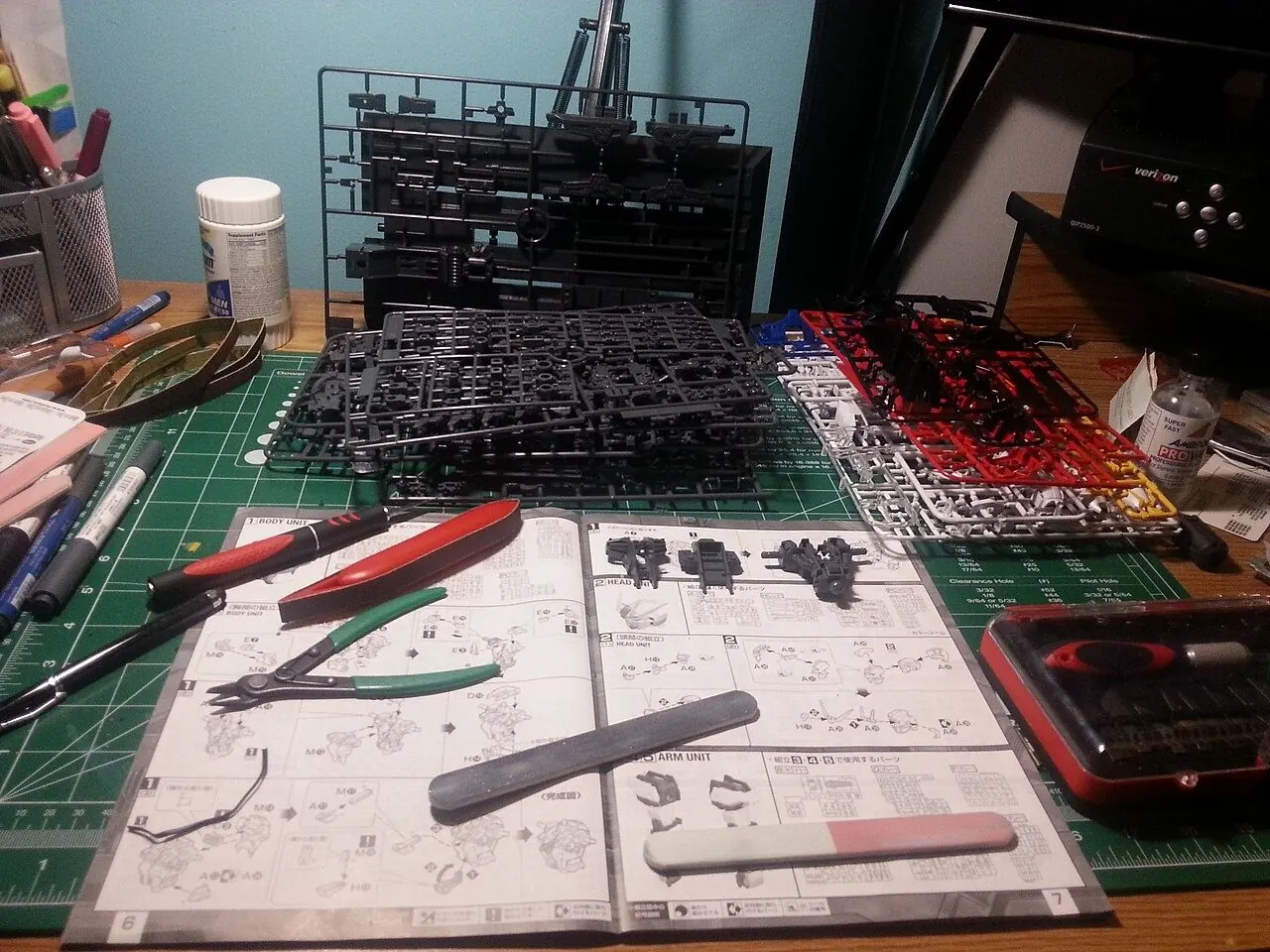
Photo: GUNDAM KITS COLLECTION (Fotografia/Photo) Cheposo (Subida/Upload) / Wikimedia Commons, CC BY-SA 3.0
Panel lining means running thin dark color into the engraved grooves of a model kit, so the lines read as shadow and the plastic looks more detailed and more realistic. You can do it with a panel line marker or with a thin enamel wash, and both are easy to learn on a first kit.
Markers vs. washes: two approaches
The simplest tool is a panel line marker. Gundam Marker, made by GSI Creos under its Mr. Hobby brand, comes in fine-tip pens that you draw along the groove and in a Pour Type that works by capillary action: touch the tip to the line and the oil-based ink flows along it. Apply a light pass, let it dry, and repeat as needed. The Pour Type is meant for bare, unpainted plastic, and its maker warns that the oil will eat through a painted finish.
The other method is an enamel wash. Tamiya Panel Line Accent Color is enamel paint that comes pre-thinned to the right viscosity, with a fine brush in the cap. Touch the brush to the groove and the paint runs along the line by itself. Tamiya recommends applying it over a base coat of lacquer or acrylic paint and testing it before you commit to the model.
Choosing the right color for your armor
The line color should complement, rather than clash with, the main colors of your kit. Black, gray and brown cover almost every build:
- black for dark colors, blue and gray parts, or when you want a strong, sharp look
- gray for white and light parts, where black can look too harsh
- brown for red, yellow and gold parts
Cleaning up and avoiding damage
After lining, clean away any color that has spread onto flat surfaces. Marker ink comes off with a clean rubber eraser once it dries, or with a dedicated marker remover pen. With an enamel wash, let the paint dry, then wipe the excess with a cotton swab lightly dampened in enamel thinner, working in one direction and switching to a fresh swab often.
Take special care with enamel products, because careless use can damage the plastic. Tamiya warns that plastic parts may become brittle when using its Panel Line Accent Color, and advises keeping it off movable parts and taking care on load-bearing areas. The risk is highest on parts under stress, such as joints, tight peg holes, and ABS frame parts. Use as little product as the line needs, and never flood a joint. A clear gloss coat before the wash adds a barrier between the solvent and the plastic.
The most common mistake is doing too much: lines that are too thick, too dark or too many make the panels look drawn on rather than shaded. Line only the engraved details, keep the color lighter than you think on pale armor, and clean up flat surfaces well. Whether you choose a marker or an enamel wash, a patient first kit is the best practice for clean, precise lines.
General information for collectors, checked against the sources below at the time of writing. Makers change product lines and packaging; check the maker’s own pages before you buy, repair or ship a piece.