World War Robot Guide
Where Ashley Wood's robot war came from, how the 1/6 and 1/12 figures are labeled, and how to tell factory weathering from real damage.
ThreeA Wiki desk2 min read
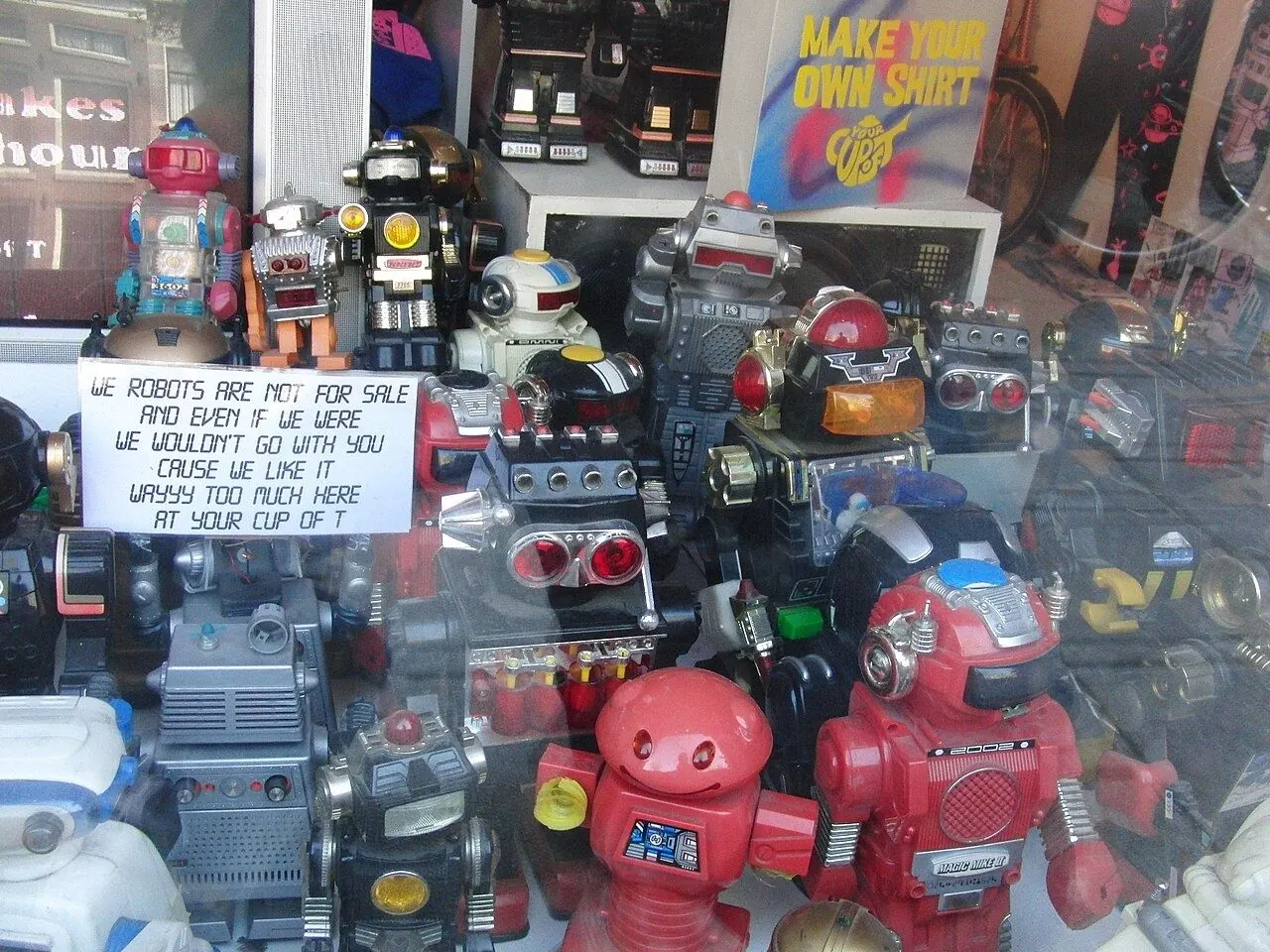
Photo: eric molina / Wikimedia Commons, CC BY 2.0
World War Robot is Ashley Wood's post-apocalyptic war story about humans and robots, and threeA turned it into its signature figure line: WWR figures in 1/6 scale and smaller WWRp "portable" figures in 1/12. Before buying one second hand, know the robot types, the scale marks and how the factory weathering should look.
From art book to figure line
World War Robot began on paper, as a series of graphic novels by Ashley Wood published through IDW Publishing. It tells, war-diary style, of a dwindling band of humans and robots fighting a conflict that may end humanity, on Earth, on the Moon and on Mars. Wood's painted pages set the look of the robots: boxy, battered war machines.
That look moved almost unchanged into toys. The first threeA release was Bertie MK1, a World War Robot figure, and the line grew into the backbone of the company until threeA closed in 2019.
The main robots and the WWR and WWRp labels
The WWR label covers the 1/6 scale figures, while WWRp stands for World War Robot portable, the 1/12 range. Portable figures are marked with a circled P on the packaging. A few pieces were also made at other sizes, including 1/3 scale.
The robot types collectors meet most often are:
- Bertie, the best-known robot, in several generations such as MK1, MK2 and MK3
- Armstrong, in generations marked 0G and 1G
- Bramble, including heavy and weapons variants
- Caesar, in military and mercenary versions
- Ankou and the much bigger Large Martin
The Tomorrow Kings and Tomorrow Queens, human soldiers made for war against the robots, belong to the same world but were sold as their own line. Most robot types were issued in many colorways, named after factions, units or events, and many of them were exclusives sold through threeA's Bambaland store or to members of its 3AA club.
What collectors check before buying
Because threeA is gone, every WWR figure now comes from the secondhand market, so a careful look before buying matters more than usual:
- Completeness. Check the listing against a photo of the figure as released: weapons, spare hands, packs and the box or shipper all count, and each colorway came with its own set.
- Joints. Larger WWR figures carry heavy limbs, so test whether the knees, hips and ankles still hold a standing pose.
- Weathering. threeA figures left the factory with deliberate weathering: layered paint, washes, drybrushing and decals that imitate chipped, dirty metal. That wear is part of the design. Real damage looks different, such as fresh scratches through the paint, sticky surfaces, broken tabs or cracked plastic.
- Identity. Match the colorway name and scale mark on the box to the figure, since many variants differ only in paint.
To judge what a figure is worth, look at completed and sold listings for the exact colorway rather than asking prices, and compare photos with fan catalogs of the line. A complete figure with its original box and a firm set of joints will always be the easiest one to live with and to sell on.
General information for collectors, checked against the sources below at the time of writing. Makers change product lines and packaging; check the maker’s own pages before you buy, repair or ship a piece.